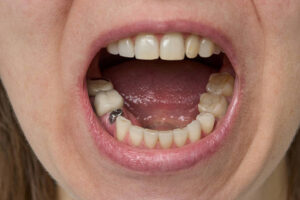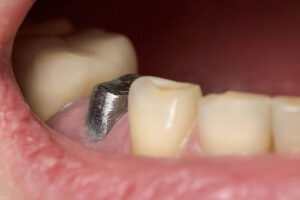
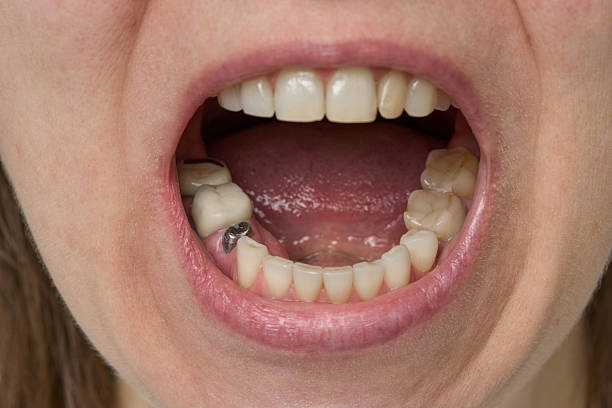
Losing a front tooth is different from losing a molar. People see the gap when you smile, talk, and laugh. So the replacement has to do two jobs: work like a tooth and fit naturally into your smile.
A front tooth dental implant can do both for many patients. Getting there takes more than placing a post in the jawbone, though. Your dentist also plans the future crown position, the gumline, the supporting bone, the neighboring teeth, and whether you can wear a temporary tooth during implant treatment.
Dentists call the visible part of your smile the esthetic zone (sometimes spelled aesthetic zone). It includes the teeth and gum tissue that show when you smile. Treatment in this area follows a more careful plan, and not every patient can have an implant and temporary crown placed on the same day. At ActOn Implants, a consultation for single tooth dental implants in Ballwin helps clarify which front tooth replacement options can give you a natural-looking dental implant result.
Key Takeaways
- Front tooth implants need extra aesthetic planning because the tooth and the gum around it are visible when you smile.
- The supporting bone and gum tissue shape how natural the final result can look.
- The implant has to be positioned to support the future crown, not just placed where bone happens to be.
- Many patients can wear a temporary tooth during treatment, though the type depends on the case.
- The final crown usually waits until the implant is stable and the gum tissue has settled.
Why Do Front Tooth Dental Implants Require More Careful Planning Than Back-Tooth Implants?
Front teeth sit in full view. Small differences in tooth shape or gum height that would go unnoticed on a molar can stand out in a smile.
That doesn’t make molar implants simple. The priorities just differ. A front tooth implant has to account for your smile, the shape of your neighboring teeth, and the appearance of the gum tissue around the new crown.
The Importance of Tooth Position, Shape, and Smile Symmetry
Your front teeth set the shape of your smile. Several details affect how a replacement front tooth will look:
- Tooth width and length
- Where the tooth sits in the arch
- How it lines up with neighboring teeth
- The position of the biting edge (incisal edge)
- Your smile line, meaning how much tooth and gum show when you smile
- Tooth color and translucency
- How closely it matches the same tooth on the other side
A crown can bite and chew well and still look slightly off. On an anterior (front) tooth, that difference is easy to notice, and smile symmetry matters to many patients. That’s why a natural-looking implant crown often needs refinements in shape and shade before it’s finished.
Why the Gumline Is More Noticeable Around a Front Tooth Implant
The gumline, or gingiva, acts like a frame around each tooth. Three terms describe it. The gingival margin is the edge of the gum where it meets the tooth. The gingival contour is the overall curve of the gumline. The interdental papilla is the small triangle of gum that fills the space between two teeth.
If the gum around an implant sits higher or lower than on the matching tooth, the crown can look longer or shorter. A missing or shortened papilla can leave a small dark triangle between teeth. Not every front tooth implant needs gum grafting to manage these details. Planning helps identify which sites need extra attention.
Front Tooth Implants vs. Molar Implants: Different Restorative Priorities
Front tooth planning usually focuses on how the crown looks, gumline symmetry, the tooth’s position in the smile, and preserving the existing tissue. Molar planning usually focuses on heavier chewing forces, available bone, how the back teeth meet, and crown size. Both locations still need careful surgical and restorative planning.
Can a Missing or Damaged Front Tooth Be Replaced With a Dental Implant?
Often, yes. A dental implant is an option for many patients missing a front tooth. Candidacy depends on the health and dimensions of the implant site.
The starting point affects the plan. Your situation may fall into one of three groups:
- The front tooth is already gone.
- The tooth is damaged and needs evaluation to see whether it can be saved.
- The tooth can’t be saved and is scheduled for extraction.
In each case, the dentist checks whether the planned implant can be positioned where the future crown needs to sit.
What Dentists Evaluate Before Replacing a Front Tooth
The dentist evaluates the whole site, not just the visible gap. A front tooth implant candidate is assessed for:
- Overall oral and gum health
- How much bone is available
- The condition of the thin bone on the front side of the jaw (the facial bone)
- Gum tissue thickness
- Space between the neighboring teeth
- The position of nearby tooth roots
- How your teeth come together when you bite
- Your medical history
During a single tooth implant consultation, these findings guide dental implant treatment planning and help determine which tooth replacement options make sense for you.
How Bone Loss or Thin Gum Tissue Can Change the Treatment Plan
Teeth sit in the alveolar bone, the part of the jaw that holds the tooth roots. Upper front teeth often have a thin layer of this bone on the lip side, called the facial (or buccal) bone plate. Some patients also have a thin tissue phenotype, meaning naturally thin gums. Both can raise the risk of gum recession after treatment and make aesthetic planning more involved.
Some patients may need bone augmentation (adding bone) or soft-tissue augmentation (adding gum thickness) before or during implant placement. Many do not. If your exam shows limited bone, you can read more about bone grafting before a dental implant and what it involves.
When a Dental Bridge or Temporary Tooth May Be Considered
An implant isn’t the only way to replace a front tooth. Depending on your health, timing, and preferences, a dental bridge or a removable replacement tooth may be worth discussing. Your dentist can explain how each option fits your case.
How Does Implant Position Affect the Appearance of a Front Tooth Crown?
Front tooth implants follow restoration-driven planning. That means the dentist decides where the final crown should sit first, then plans the implant position to support it.
Available bone isn’t the only factor that decides where the implant goes. The planned tooth position guides the placement too. The treatment team weighs your anatomy and the intended restoration together.
Why Dental Implant Depth and Angle Matter in the Smile Zone
The depth and angle of the implant affect almost everything built on top of it. They influence the crown’s shape, how the crown rises through the gum (its emergence profile), and how much room the restoration has. They also affect gum contours, cleaning access, and how easily the final crown can be attached.
An implant positioned poorly for the planned tooth can make restoration design more difficult. That’s why front tooth implant placement is planned in detail before surgery. Planning tools help, but no technique removes all positioning risk.
How CBCT Imaging Helps Dentists Plan Front Tooth Implant Placement
Cone-beam computed tomography (CBCT) is a 3D dental scan. It shows details a standard X-ray can’t, such as bone height and width, the contour of the facial bone, nearby roots, and anatomical limits.
With that information, the dentist can map where the implant fixture should go relative to the planned crown. ActOn Implants offers 3D planning for guided dental implant surgery to connect imaging with the intended tooth position. Imaging needs vary by patient, and a scan alone can’t predict the final aesthetic result.
Why the Position of Adjacent Teeth Matters for a Single Front Tooth Implant
Your neighboring teeth shape the space the implant crown has to fill. The dentist considers available space, the position of neighboring roots, where the crown will touch the teeth beside it, and the gum tissue between them. Those factors also set the crown’s proportions.
The interdental papilla, the triangle of gum between two teeth, depends heavily on the bone supporting the neighboring teeth. Restorative design can help support it, but the surrounding anatomy sets the limits. Complete papilla fill isn’t something any dentist can promise.
How Does Gum Tissue Shape Influence the Final Appearance of a Front Tooth Implant?
A natural-looking front tooth implant depends on two things: the crown you see and the gum tissue around it. Gum contour, tissue thickness, and the shape of the underlying bone all affect how smoothly the implant restoration blends into your smile.
What Is the Gingival Margin, and Why Does Its Height Matter?
The gingival margin is the edge of the gum tissue around a tooth or crown. Its height affects visual symmetry, crown length, tooth proportions, and how the tooth relates to its neighbors.
For example, if the gumline around a front implant sits higher than on the matching tooth, the crown will look longer. A small difference like that doesn’t mean the implant has failed. It’s one reason gum height gets so much attention during planning.
What Is the Emergence Profile of a Front Tooth Implant Crown?
The emergence profile is the shape of the restoration as it rises out of the gum. It starts at the round implant connection, passes through the abutment or restorative component, and widens into the crown’s contour and visible tooth shape.
That transition has to support the surrounding gum tissue while leaving room to clean around the tooth. On a front tooth, it also helps shape how natural the gumline looks.
Can Gum Grafting Help Improve the Appearance Around a Front Tooth Implant?
In selected cases, yes. Soft-tissue grafting may be considered when the gums are thin, when there’s an existing tissue deficiency, or when the site carries a higher aesthetic risk. The aim is to improve local conditions by adding tissue volume.
A meta-analysis on tissue grafting with immediate implants concluded that grafting, while not essential, helped limit tissue loss and improved esthetic scores. Grafting still can’t guarantee a specific gumline. Not every front tooth implant needs it.
Why Is Gum Recession a Consideration With Front Tooth Dental Implants?
If the gum around an implant recedes, the edge of the crown or the abutment underneath may become visible. Several factors can raise that risk: existing tissue conditions, implant position, restoration contours, inflammation, and natural changes in the surrounding tissue.
None of these makes recession certain. They’re considerations your dentist weighs during planning, and they’re worth discussing so your expectations stay realistic.
Will I Have a Temporary Front Tooth While My Dental Implant Heals?
In most cases, you won’t have to go without a front tooth. Several temporary options exist, and the right one depends on your clinical situation.
There’s an important distinction here. Some temporary teeth attach to the implant itself. Others are supported separately, without putting pressure on the healing implant. You can have a temporary front tooth even if your implant isn’t ready to hold a crown.
What Are the Temporary Tooth Options During Front Tooth Implant Treatment?
Your dentist may consider several provisional options. Each has trade-offs in appearance, stability, cleaning, and pressure on the surgical site.
| Temporary Option | How It’s Supported | Things to Consider |
|---|---|---|
| Implant-Supported Provisional Crown | Attached to the implant | Requires enough implant stability; can help shape the gum tissue |
| Removable Temporary Tooth (Flipper) | Rests on the gums and palate | Easy to remove and clean; must avoid pressing on the surgical site |
| Clear Retainer With a Replacement Tooth | Fits over neighboring teeth | Keeps pressure off the site; usually removed to eat |
| Resin-Bonded Temporary Restoration | Bonded to neighboring teeth | Fixed in place; depends on the condition of the neighboring teeth |
Availability depends on your case and your dentist’s recommendation.
Can a Temporary Crown Be Attached to a Front Tooth Implant the Same Day?
Sometimes. Three terms are worth separating. Immediate implant placement means the implant goes in the same day the tooth comes out. Immediate provisional restoration means a temporary crown is attached that day, usually kept out of your bite. Immediate functional loading means the new tooth takes full biting forces right away.
An implant-supported temporary crown may be possible in selected cases. Clinicians look at how stable the implant is at placement, the condition of the bone and gums, the implant position, your bite, and the risk of putting force on a healing implant. A systematic review of same-day implant temporaries notes that studies recommend strict selection criteria, including thicker gum tissue, which is linked to less recession.
A same-day temporary tooth isn’t the final restoration, either. Our article on whether same-day implants are the right fit covers candidacy in more detail.
How Can a Temporary Front Tooth Help Shape the Gumline?
A carefully designed provisional crown can guide the gum tissue as it matures. Dentists call this tissue conditioning.
The temporary crown starts shaping the emergence profile. The dentist may adjust its contour over several visits while watching how the tissue responds. Those adjustments then inform the shape of the final crown. A temporary crown can guide existing tissue, but it can’t create bone or gum that isn’t there.
What if a Temporary Crown Cannot Be Placed on the Implant Immediately?
Then your dentist will choose a different temporary tooth while the implant heals. The goal is to keep your smile intact without putting unwanted force on the implant.
A delayed or staged approach is common and often the safer choice. It doesn’t mean your treatment is going poorly. It means the plan protects the implant during its most sensitive healing period.
Step-by-Step Front Tooth Dental Implant Treatment in Ballwin, MO
Front tooth implant treatment follows a coordinated sequence, from first assessment to final crown. The exact steps depend on whether your original tooth is still present, the condition of the surrounding tissue, and the approach your dentist recommends. The number of appointments varies from patient to patient.
Step 1: Consultation, Smile Assessment, and Digital Imaging
Your front tooth implant consultation covers your medical and dental history, an exam of the missing or damaged tooth, and an assessment of your gums and bone. Your Ballwin implant dentist also looks at your smile line and neighboring teeth, and takes diagnostic imaging when needed.
You’ll also discuss temporary and final tooth replacement options. Before treatment begins, you should understand each expected stage of your dental implant plan.
Step 2: Tooth Extraction or Implant-Site Preparation When Needed
If you still have the damaged tooth, the dentist first confirms whether it can be restored. If it can’t, extraction comes before or at the same time as implant placement. The timing of dental implants after extraction depends on how the site looks once the tooth is out.
During extraction, the dentist works to preserve the supporting bone and gum. Some sites benefit from grafting, such as socket preservation after an extraction, before the implant goes in.
Step 3: Precision Placement of the Front Tooth Dental Implant
The implant fixture is placed in the jawbone at a position planned around the future crown. The dentist also considers available bone, the roots of neighboring teeth, the gum tissue, and how stable the implant is at placement.
ActOn Implants offers guided implant surgery. Not every single-tooth case uses the same guidance system or technique, and your dentist will explain the approach planned for you.
Step 4: Temporary Tooth Placement and Early Healing
You’ll receive a temporary tooth based on your plan. It may attach to the implant, or it may be supported separately.
Your dentist will explain any chewing restrictions. Many patients are asked not to bite into food with the temporary tooth. You’ll also get cleaning instructions and early follow-up visits to check on healing.
Step 5: Osseointegration and Gum Tissue Maturation
Osseointegration is the process by which the implant forms direct structural contact with the surrounding bone. This bond gives the implant its stability.
Bone integration and gum tissue maturation are related but separate parts of healing. The bone needs time to bond with the implant. The gums need time to settle into their final shape. Dentists often wait for both before placing the final crown. Healing time varies with your health and the complexity of your case.
Step 6: Final Front Tooth Implant Crown Placement and Bite Evaluation
Once healing is complete, the restorative stage begins. The dentist records the implant position, selects or designs the abutment, and has the final crown made.
At the fitting, the dentist checks the crown’s shape and shade, how it touches neighboring teeth, how it meets your bite, and how easily you can clean around it. You’ll also get instructions for long-term care. Crown materials vary by case. The final crown may be made and placed by a restorative dentist working with your implant clinician.
How Do Dentists Make a Front Tooth Implant Crown Look Natural?
The goal is a crown that fits your existing teeth, your bite, and the surrounding tissue. Several restorative details make that possible.
Matching the Color, Shape, and Size of Neighboring Teeth
The dentist and lab consider shade, translucency, tooth proportions, surface texture, the position of the biting edge, and alignment with your neighboring teeth.
Matching a single front tooth is one of the more demanding tasks in restorative dentistry. The new crown sits right next to natural teeth, where any difference is easy to compare. A close match is the goal, though a perfect match isn’t always possible.
How the Final Abutment and Crown Shape Work Together
The final look depends on a chain: implant position, then abutment design, then crown contour, then the surrounding gum tissue. The abutment connects the implant to the crown and helps shape how the crown rises from the gums. If you’d like to understand that component in more detail, see our guide to custom versus standard dental implant abutments.
Why Bite Alignment Matters Even for a Front Tooth Implant
Front teeth help you bite into food and guide certain jaw movements. So the dentist checks how the implant crown contacts the opposing teeth and how much force it takes.
Small bite adjustments help prevent excess stress on the restoration. A crown that looks right also has to meet your bite comfortably.
How Long Does It Take to Replace a Front Tooth With a Dental Implant?
It depends on the site and the planned stages. The surgical appointment is one visit. The complete treatment, from consultation to final crown, takes longer and varies from person to person. Same-day completion of the final tooth isn’t something to expect.
What Changes the Treatment Timeline for a Front Tooth Implant?
Several factors shape your timeline:
- Whether the tooth needs to be extracted first
- The condition of the bone and gum tissue
- Whether site preparation or grafting is needed
- How stable the implant is
- How long healing and tissue maturation take
- The time needed to make the final crown
Two patients replacing the same tooth can have very different schedules because of these differences.
Why Dentists May Wait Before Placing the Final Front Tooth Crown
Gum tissue can change shape during healing. Placing the final crown too early can leave a mismatch if the gumline shifts afterward. Waiting lets the dentist match the final crown to stable tissue.
During that time, a provisional restoration holds the space and keeps your smile intact. It’s a working tooth for now, not the finished result.
When Should Patients Contact Their Implant Dentist During Healing?
Some tenderness after surgery is expected. Symptoms that get worse instead of better can point to an infection or a problem with the implant or temporary tooth. These are easier to manage when caught early. Contact your implant dentist if you notice:
- Pain or swelling that increases instead of improving
- Bleeding that doesn’t stop
- A temporary tooth that becomes loose or damaged
- A new problem with your bite
- Any change that concerns you
It’s better to have something checked early than to wait and see.
What Can Affect the Final Appearance of a Front Tooth Dental Implant?
An implant restoration can be designed to blend into your smile. The final result still depends on your original anatomy and how your tissues respond, in addition to the clinical plan. Knowing this upfront helps you set realistic expectations.
Existing Bone and Gum Tissue Conditions
If bone or gum was lost before treatment, the site may not support an ideal gumline. Corrective procedures such as grafting may be recommended in selected cases. They can improve conditions, but they can’t guarantee a specific result.
Healing Changes and Gumline Stability
Gum tissue often changes during healing, and some settling is normal. Follow-up visits let the dentist confirm the tissue is stable before the final crown. Changes like persistent swelling, bleeding, or a gumline that keeps moving should be checked rather than waited out.
Why a Front Tooth Implant May Not Look Exactly Like the Original Tooth
An implant restoration isn’t biologically identical to a natural tooth. The gum is supported differently around an implant than around a natural root. Existing bone loss, crown material, tooth proportions, and gumline position can all create small differences.
A well-planned front tooth implant can look natural and fit your smile. Still, no dentist can promise it will be indistinguishable from the tooth you lost.
What Affects the Cost of a Front Tooth Dental Implant in St. Louis, MO?
Cost matters when you compare tooth replacement options. The total estimate usually includes more than placing the implant.
Implant Placement, Temporary Teeth, and the Final Crown
A front tooth treatment plan may include:
- Consultation and imaging
- Implant placement
- The abutment
- A temporary replacement tooth
- The final crown
- Any additional treatment, if needed
Ask which of these your estimate includes so you can compare quotes accurately.
Why Some Front Tooth Implant Cases Need Additional Preparation
Some cases are more complex. Extraction, bone grafting, soft-tissue treatment, a provisional crown, or extra appointments can all add to the plan. Many patients don’t need all of these. You can review how ActOn Implants approaches dental implant treatment costs before your visit.
What Should Ballwin Patients Ask Before Getting a Front Tooth Dental Implant?
A good consultation should help you understand how the tooth will look, what temporary tooth you’ll wear, the treatment stages, and any limits in your case. At ActOn Implants in Ballwin, Dr. Matthew Slaven, a board-certified periodontist, evaluates your bone and gum tissue as part of front tooth implant planning.
Questions About the Gumline and Final Crown Appearance
- What factors could affect my gumline after treatment?
- Are my current bone and gum tissue suitable for an implant?
- Will I need additional tissue treatment?
- How will the crown be matched to my neighboring teeth?
- What cosmetic limitations should I understand beforehand?
Questions About Temporary Teeth and Treatment Timing
- Will I have a temporary tooth?
- Will it attach to the implant or be supported separately?
- Can I wear it during normal daily activities?
- Will I need to avoid biting with it?
- What determines when the final crown can be placed?
- Which clinician will provide the final restoration?
If a visible gap is your biggest worry, start with these questions. The answers will give you a clear picture of what to expect at each stage.
Frequently Asked Questions About Front Tooth Dental Implants in Ballwin, MO
These are practical questions patients often ask when considering a front tooth replacement.
Can a dental implant replace one missing front tooth?
Yes, in suitable patients. A single implant with a crown can replace one missing front tooth without involving the neighboring teeth. Your dentist first evaluates the bone, gums, available space, and planned crown position to confirm the site can support a natural-looking result.
Can I get a front tooth implant and temporary crown on the same day?
Sometimes. A same-day temporary crown may be possible when the implant is very stable at placement, and the bone and gum conditions are favorable. It’s usually kept out of your bite while healing. The temporary crown is not the final crown, which comes after the implant and gums have healed.
Will I have to go without a front tooth while my implant heals?
Usually not. Temporary options may include a crown attached to the implant, or a tooth supported separately, such as a removable flipper or a clear retainer with a tooth. Which option fits depends on your exam, so your dentist will recommend one after evaluating your case.
Will my gumline look the same after getting a front tooth implant?
It may look very similar, but exact symmetry can’t be promised. The final gumline depends on your existing bone and gum tissue, how the site heals, where the implant is positioned, and how the restoration is designed. Your dentist can explain any limits for your case before treatment.
Do front tooth dental implants require bone grafting?
Not always. Many patients have enough bone for an implant. Others need added support, especially after bone loss or a long-missing tooth. An exam and imaging help your dentist decide whether grafting is needed and whether it can happen before or during implant placement.
Are front tooth dental implants painful?
The area is numbed during surgery, and sedation options may be available. Afterward, most patients feel some soreness or swelling, and the amount varies from person to person. Your dentist will give you aftercare instructions and tell you what to expect during recovery.
How much does a front tooth dental implant cost in Ballwin, MO?
It depends on your treatment plan. The total can include the implant, abutment, temporary tooth, final crown, and any extra procedures such as grafting. Review ActOn Implants’ dental implant cost information or schedule a consultation for an estimate based on your case.
Schedule a Front Tooth Dental Implant Consultation in Ballwin, MO to Discuss Your Gumline, Temporary Teeth, and Final Smile
A missing front tooth affects more than your bite. It can change how you feel about your appearance and how confidently you smile. You may also be wondering about a temporary tooth, your gumline, and how the final crown will look.
A good front tooth replacement plan considers the implant and the visible restoration together. ActOn Implants is located at 184 Clarkson Rd, Ballwin, MO 63011. Many patients visit from nearby Manchester, while others come from Ellisville and across the St. Louis area. Dr. Matthew Slaven, a board-certified periodontist and implant dentist, can help you understand whether a natural-looking dental implant fits your needs.
Schedule a front tooth dental implant consultation to discuss your candidacy, temporary tooth options, gum and bone health, the treatment process, and realistic expectations. You can also learn more about single tooth implants in Ballwin before your visit.