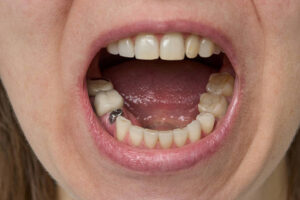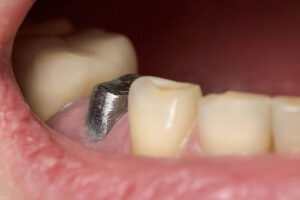
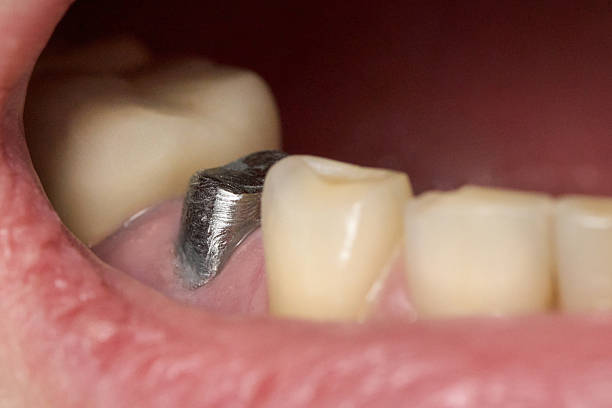
When you replace a missing tooth with an implant, you hear a lot about the implant post and the crown. You hear much less about the part between them. That part, the dental implant abutment, helps decide how your new tooth fits and how it looks where it meets your gums.
The abutment connects the implant fixture in your jaw to the crown you see. Its shape, height, position, and material affect how the crown rises through the gum tissue. They also affect implant crown fit, comfort, and how easy the tooth is to keep clean.
Most abutments fall into two groups. A standard dental implant abutment comes in preset shapes and sizes. A custom dental implant abutment is designed for one patient’s implant site. A custom abutment is not automatically the better choice. Both types can work well, depending on implant position, gum tissue, available space, and crown design. Patients across the St. Louis area who are considering single tooth dental implants in Ballwin can talk through each part of their proposed restoration during treatment planning at ActOn Implants.
Key Takeaways
- The abutment is the connector between the implant fixture in the bone and the crown you see.
- Standard abutments come in preset shapes, while custom abutments are designed around one patient’s implant site and planned crown.
- The abutment’s shape helps guide how the crown rises out of the gum tissue, which affects the look of the gumline.
- A restoration you can clean well matters as much as one that looks natural, because plaque at the gumline affects long-term gum health.
- The right abutment depends on an individual exam of your implant position, tissue, bite, and crown plan.
What Is a Dental Implant Abutment, and Why Does It Matter for a Single Tooth Implant?
A dental implant abutment is a connecting piece that sits on top of the implant fixture. It links the fixture to the crown. Dentists call it a prosthetic component, meaning it belongs to the tooth replacement rather than the surgical anchor.
The abutment is not the artificial tooth root. That job belongs to the implant fixture. In many cases, it is not the visible tooth either. It works mostly out of sight, at and just below the gumline.
How the Implant Post, Abutment, and Crown Work Together
A typical implant-supported crown has three dental implant components:
- The implant fixture is the screw-shaped post placed in the jawbone. During healing, bone bonds to its surface through a process called osseointegration, which gives the tooth its stable support.
- The implant abutment is the connector that attaches to the fixture and holds or supports the crown.
- The dental implant crown is the tooth-shaped restoration you see when you smile and use when you chew.
The fixture provides the foundation. The abutment and crown are then designed around where the new tooth should sit.
This three-part setup is the most common model for single tooth replacement. Some restoration systems combine parts or use alternative designs. For example, some crowns are joined to a small base component before placement. The basic idea stays the same: a stable implant supports a restoration shaped to fit your mouth.
Is a Healing Abutment the Same as the Final Dental Implant Abutment?
Usually not. A healing abutment, sometimes called a healing cap, is a temporary piece placed on the implant while the gums recover. It keeps an opening through the gum tissue so the dentist can reach the implant later.
As the gums heal, they form around this temporary piece. Once the tissue settles and the implant is stable, the dentist can select the final implant abutment for the permanent crown.
Some treatment plans use a provisional (temporary) crown during healing. Its shape can help guide the gum tissue into a more natural contour before the final restoration. Not every patient needs separate healing and final components, though. The implant restoration stages depend on the implant system, the surgical approach, and the site itself.
Custom vs. Standard Dental Implant Abutments: What Is the Difference?
The difference comes down to how the shape is decided. Standard abutments are manufactured in set designs and dimensions. Custom abutments are individually designed for one restoration and one treatment site.
Neither type is a lower or higher grade of care. A well-chosen stock abutment can be the right answer. A custom abutment earns its place when your anatomy or crown plan calls for a shape the preset options can’t provide.
What Is a Standard or Prefabricated Dental Implant Abutment?
A prefabricated implant abutment comes from the manufacturer in fixed shapes and sizes. Each is made to fit a specific implant connection within a particular implant system.
Stock dental implant abutments typically come in a range of heights, widths, and angles. Many are titanium implant abutments. The dentist chooses the option that best matches the implant and the planned crown.
A standard abutment can work well when the implant position, gum thickness, and available space line up with an available size. In those cases, it can give the crown solid support and a suitable contour at the gumline. Because there is no individual design step, it can also keep the restoration process simpler and may cost less.
What Is a Custom Dental Implant Abutment?
A custom dental implant abutment is shaped specifically around the needs of your implant site. Its design starts from the finished tooth and works backward.
Several details can shape a patient-specific implant abutment:
- Where the final crown needs to sit
- How much space there is between the implant and the opposing teeth
- The contour of the surrounding gum tissue
- How deep the implant sits and its angle
- The desired emergence profile (how the crown rises out of the gums)
Some custom abutments are designed on a computer and milled, which dentists call CAD/CAM abutments. Others are shaped by hand through laboratory methods.
A customized shape helps when stock sizes can’t provide the contour or grip the crown needs. Examples include an implant sitting at a slight angle, or a site where the gum tissue needs specific support.
Does a Custom Abutment Always Fit Better Than a Standard Abutment?
Not necessarily. Good fit depends on more than whether a part is customized.
Several factors decide how well the final restoration fits:
- The abutment matches the implant system’s connection
- The component is manufactured accurately
- The dentist seats it correctly and checks the fit
- There is enough space for the abutment and crown
- The crown is well designed
- The abutment works with the surrounding gum tissue
It helps to separate two ideas. A custom abutment has a patient-specific outer shape. The precision of the connection between abutment and implant depends on manufacturing quality and compatibility. A stock abutment from the implant’s own system can have an excellent connection.
Research reflects this balance. In a systematic review and meta-analysis of single implants in the smile zone, researchers found no significant differences between stock and custom CAD/CAM abutments in gum recession, papilla fill, or gum esthetics after 12 months. The choice should follow your anatomy and crown plan rather than a general preference.
Here is how the two types compare at a glance.
| Feature | Standard Abutment | Custom Abutment |
|---|---|---|
| How It Is Made | Manufactured in set shapes and sizes | Designed for one patient’s implant site |
| Shape | Predetermined height, width, and angle | Shaped around crown position and gum contour |
| Often Considered When | Implant position and tissue match an available size | The site needs a contour, angle, or height stock sizes can’t provide |
| Design Process | Selected from existing options | Designed and fabricated, digitally or in a lab |
| Connection to the Implant | Depends on system compatibility, manufacturing accuracy, and correct seating | Depends on system compatibility, manufacturing accuracy, and correct seating |
| Cost | May cost less, with no individual design step | May add design and fabrication costs |
How Does Abutment Design Affect the Fit of a Dental Implant Crown?
Patients judge fit in simple terms. Does the tooth feel comfortable when you bite? Does food catch around it? Does it look like it belongs?
Behind those questions sit several design factors. The final crown has to fit the planned tooth position, the gum tissue around it, the neighboring teeth, and the teeth it bites against. The abutment provides the connection and shape that let the crown meet all of those demands.
How the Abutment Supports the Dental Implant Crown
The abutment has two jobs. Its base locks into the implant fixture through a precise connection. Its upper portion holds or supports the crown.
These are separate connections. The fixture connection keeps the abutment stable on the implant. Crown retention is how the crown itself stays attached, which depends on the crown design and how it is secured.
Compatibility matters at both points. An abutment must match the implant system’s connection exactly. A poor match can lead to loosening or strain on the parts.
The design also has to handle chewing forces. Back teeth take heavier biting loads than front teeth, so the abutment and crown must be built for the forces at that site.
Why Abutment Height, Shape, and Available Space Matter
Think of the space above an implant as a box the abutment and crown must fit inside. The bottom is the top of the implant. The top is the opposing tooth when you bite. The sides are the neighboring teeth.
Dentists call this vertical restorative space, or prosthetic space. If the space is short, the abutment must be shorter too. A shorter abutment gives the crown less surface to grip, which affects implant crown retention and resistance to tipping forces.
Implant depth and position also change the box. A deeper implant means the abutment must travel farther through the gum tissue before the crown begins. A slightly angled implant shifts where the crown can sit.
That is why the abutment can’t be chosen on its own. Its height and shape depend on the crown dimensions, which depend on the space and the neighboring teeth.
How Does an Implant Abutment Affect Crown Margins and Cleaning Access?
The crown margin is the edge where the crown meets the abutment beneath it. Where that edge sits, and how the restoration is shaped around it, can affect your gum health.
Margin location and restoration contours matter for:
- How easily your dentist or hygienist can examine the area
- How well you can reach it with a toothbrush and floss
- How much plaque collects around the implant
- How the surrounding gum tissue responds
- How simple future maintenance will be
Margins placed slightly below the gumline are common and can stay healthy. Problems are more likely when a margin sits so deep that cleaning tools can’t reach it. Bulky contours can also trap plaque. A 2025 review of implant emergence profiles concluded that cleanability and limiting plaque buildup should be priorities in implant restoration design.
A good restoration is one you can maintain. That goal should shape the abutment choice from the start.
Why Does the Dental Implant Abutment Affect Gum Shape and the Final Smile?
The answer starts with a term called the emergence profile. It describes the shape of the restoration as it travels from the implant, up through the gum tissue, and into the visible crown.
Your gumline depends on two things working together. The first is your existing bone and gum tissue. The second is the contour of the abutment and crown. The abutment alone does not decide how your gums will look.
What Is the Emergence Profile of a Dental Implant Crown?
A natural tooth rises from the gum on a root that is already tooth-shaped. An implant works differently. The implant connection is round and usually narrower than the tooth it replaces.
The restoration has to bridge that gap. It widens from the narrow implant connection to the full shape of a tooth at the gumline. Both the abutment and the crown contribute to this transition.
The shape of that transition affects the peri-implant soft tissue, the gum tissue around the implant. A contour that is too bulky can press on the gums and make cleaning harder. A contour that offers too little support can leave the gingival contour (gum outline) flat or uneven. The part of the crown nearest the gumline, called the cervical crown contour, needs to follow that outline so the tooth and gums look natural together.
How Can an Implant Abutment Influence the Appearance of the Gumline?
The abutment’s shape supports the gum tissue from underneath. Change the support, and the tissue can settle differently.
Several factors shape the final dental implant gumline:
- How symmetrical the gums are with the neighboring teeth
- How thick the gum tissue is
- How much gum volume remains after tooth loss
- Where the implant sits in the bone
- The contours of the abutment and crown
- The shape and gum level of the adjacent natural teeth
Some customized components can help support site-specific contours. Still, the underlying bone and gum tissue set limits. If bone or gum volume has been lost, the abutment can’t fully restore it. Gumline symmetry is a planning goal, not a guarantee.
Why Do Thin Gums and Visible Front Teeth Require Additional Planning?
Gum tissue thickness varies from person to person. Thin tissue lets more of what lies beneath show through. In some patients, a metal abutment can create a grayish shadow at the gumline.
That matters most for teeth that show when you smile. In these sites, the dentist may weigh abutment material, restoration shape, and ways to manage or support the gum tissue. If you’re planning an implant for a visible front tooth, these details often get extra attention.
Titanium, Zirconia, and Other Abutment Materials: What Should Patients Know?
Abutment material and implant fixture material are separate decisions. Your implant fixture might be titanium while your abutment is titanium, zirconia, or a combination of the two. Other materials, such as gold alloys, have been used over the years, but titanium and zirconia are the most common today.
Material choice depends on the implant system, the abutment design, chewing forces at the site, your gum tissue, and your clinician’s judgment.
Titanium Dental Implant Abutments
Titanium has a long track record in implant restorations. It is strong, resists fracture, and holds up well under chewing forces.
Titanium abutments are compatible with many implant systems. They are a common choice for back teeth, where biting forces are higher and the gumline is less visible.
The main limitation is color. Under thin gum tissue, a titanium abutment can sometimes show as a gray tint. Whether that matters depends on the site and on how much the area shows when you smile.
Zirconia and Tooth-Colored Dental Implant Abutments
A zirconia dental implant abutment is tooth-colored. In selected cases, it can reduce the chance of a dark shadow under thin gum tissue.
A zirconia abutment is not the same as a zirconia implant fixture. The abutment sits above the bone and supports the crown. Some zirconia abutments attach to a small titanium base where they meet the implant.
Zirconia has different design needs than titanium. It usually needs thicker walls to stay strong, and it may be less suited to sites with heavy biting forces. A tooth-colored abutment also doesn’t guarantee a better result on its own. Gum health, implant position, and crown design still drive the final appearance.
Does Abutment Design Matter More Than the Material?
Material is one piece of a larger design decision. Your dentist weighs it alongside:
- The shape of the component
- The contours of your gum tissue
- Where the crown needs to sit
- The strength the site requires
- How easily you can clean the restoration
An ideal material can’t fix a poorly shaped restoration. A well-designed abutment in the right material for that site is what supports a good result.
How Do Dentists Choose the Right Abutment During Dental Implant Treatment Planning?
Planning for the restoration should start before or during surgical planning. The final abutment may be chosen months later, but the decisions that limit your options are made earlier.
Where the implant sits in the bone largely shapes what the abutment and crown can do. Your exam, imaging, bite space, and gum tissue all guide component selection.
Evaluating Gum Tissue, Bone Support, and the Planned Crown
Before choosing an abutment approach, a clinician may evaluate:
- How much bone is available at the implant site
- The health and thickness of the gum tissue
- The position of the neighboring teeth
- Where the final crown should sit
- The space available for the crown when you bite
- What you expect from the finished tooth
Both the planned crown and your anatomy shape the treatment plan. A crown planned without regard to the bone, or an implant placed without regard to the crown, can limit what the abutment can do.
How Guided Dental Implant Surgery Supports Restoration-Driven Planning
Restoration-driven implant placement means planning the final tooth first. The implant position is then chosen to support it.
Three-dimensional imaging shows the clinician the bone height, width, and nearby anatomy. Digital planning software can then place a virtual tooth and map the implant position beneath it. A surgical guide helps transfer that plan to the actual placement.
Implant angle and depth affect which abutments are possible. An implant positioned in line with the planned crown generally gives more restorative options. Patients researching guided dental implant surgery in Ballwin can review how ActOn Implants uses planning technology. Guided surgery helps carry out a precise plan, but it does not guarantee a specific abutment type or outcome.
Digital Scans, Laboratory Design, and Final Abutment Selection
Once the implant has healed, the restorative steps generally follow this order:
- Record the exact implant position, with a digital scan or a traditional impression.
- Review what the final crown needs in terms of space, contour, and bite.
- Select a standard abutment or design a custom one.
- Fabricate the crown and any custom components.
- Verify the seating, crown fit, bite, and cleaning access.
Digital scanning and CAD/CAM design are two possible methods. Laboratory techniques are another. The workflow depends on the case and the implant system.
Implant placement, restoration fabrication, and final crown fitting may involve more than one clinician or a dental laboratory.
When Might a Custom Abutment Be More Useful Than a Standard Abutment?
Some situations make individualized geometry more helpful. These examples aren’t a selection checklist. A dentist still needs to review your actual implant system, gum contours, and crown plan.
Single Tooth Implants in Highly Visible Areas
Teeth near the front of your smile get more scrutiny. Small differences in gum height, crown shape, or tissue color stand out more.
In these sites, a custom abutment can shape the crown’s emergence and support the gum contour to match neighboring teeth. Custom zirconia designs can also pair that site-specific shape with a tooth-colored material where tissue is thin. The broader treatment plan for a front tooth involves more steps than abutment selection alone.
Dental Implants With Limited Restorative Space or Challenging Angles
Limited bite space, a deep implant, or an implant set at an angle can all narrow the stock options. A custom abutment can be designed to correct for some angulation or to fit a short space. It can also position the crown margin where you can clean it.
There are limits. Customized geometry cannot always correct an implant placed outside a workable range. This is one reason why implant placement angles matter so much during surgical planning.
When a Standard Abutment May Be the More Practical Choice
Stock components often work well when their available shape and size meet the restoration’s needs. This is common for back teeth in sites with good bone, good tissue, and enough space.
A standard abutment from the implant’s own system is designed for that exact connection. It can simplify the process and may lower the component cost. Maintenance needs depend on the overall restoration, not on whether the abutment was stock or custom.
The right choice depends on your specific implant and crown. A blanket preference for either type doesn’t serve patients well.
Do Custom Dental Implant Abutments Cost More or Require Different Maintenance?
Cost is a fair question, especially if you’re researching affordable dental implants. Your total treatment plan may include the surgery, the components, the crown, and follow-up care. The abutment is one line within that plan.
What Can Affect the Cost of a Custom Dental Implant Abutment?
Several factors can affect the price of a custom component:
- The design and fabrication work involved
- How complex the shape needs to be
- The material, such as titanium or zirconia
- Compatibility requirements for the implant system
- Laboratory involvement
- The overall crown or restoration plan
Because these vary by case, the clearest answer comes from your own treatment estimate. You can review how ActOn Implants approaches dental implant treatment costs before your visit, then ask what your quote includes.
Do Custom and Standard Abutments Need Different Cleaning?
In most cases, no. Both types need daily oral hygiene and regular professional checkups.
You clean the parts you can reach: the crown and the gumline around it. You don’t remove or clean the abutment yourself, since it stays covered by the crown.
What changes cleaning is the overall shape of the restoration. A crown with smooth, accessible contours is easier to brush and floss around. Neither abutment type automatically means fewer maintenance visits.
Can a Dental Implant Abutment Be Replaced Without Removing the Implant?
Often, yes. If an abutment is damaged or no longer suitable, it can usually be replaced while a stable implant fixture stays in place.
An implant tooth can run into a few different issues, and each one needs a different response:
- A damaged or poorly suited abutment may be replaced on its own.
- A chipped or worn crown may be replaced without changing the abutment.
- A loosened restorative screw may only need retightening or replacing.
- An implant fixture that has lost its bond with the bone is a separate problem that involves the implant itself.
Only a professional exam can identify which component needs attention.
Choosing Single Tooth Dental Implant Treatment in Ballwin, MO
Abutment selection is one decision inside a larger treatment plan. Your implant position, gum health, bite, and crown design all connect to it.
For patients seeking dental implants in Ballwin, the consultation is the right time to ask how each of those pieces fits together. ActOn Implants serves patients from its Ballwin office on Clarkson Road.
Questions to Ask Your Ballwin Implant Dentist About Abutment Selection
Bring these questions to your consultation:
- Which abutment design is appropriate for my implant?
- Why is that design being recommended?
- How will the crown fit against my gumline?
- Will the finished restoration be easy to clean?
- Does the quoted treatment cost include the abutment and crown?
- Who will fabricate and place the final restoration?
- What future maintenance might be needed?
Clear answers to these questions will tell you a lot about how your restoration is being planned.
How Periodontal and Restorative Planning Work Together
A lasting implant tooth depends on a chain of decisions. Healthy supporting tissue comes first. Then the implant goes in the right position. The abutment and crown are designed to work with both. Long-term maintenance keeps everything healthy.
Dr. Matthew Slaven is a board-certified periodontist and implant dentist. His training centers on the gums and bone that support teeth and implants. That background shapes how he evaluates tissue health alongside implant placement and restoration planning. The specific abutment options for your case are something to discuss during your exam.
Frequently Asked Questions About Custom and Standard Dental Implant Abutments
These are common questions patients ask when reviewing a single-tooth implant treatment plan.
What is the difference between a custom and standard dental implant abutment?
A standard abutment is manufactured in preset shapes and sizes. A custom abutment is designed for one patient’s implant site and planned crown. Both connect the implant fixture to the restoration. The better fit for you depends on your implant position, gum tissue, available space, and crown design.
Is a custom dental implant abutment better than a standard abutment?
Neither type is better for every patient. A custom abutment can help when the gum contour, implant angle, or restoration position needs a shape stock sizes can’t provide. A standard abutment can work very well when the available sizes match the site. Compatibility with the implant system matters for both.
Can an implant abutment affect how natural my crown looks?
Yes. The abutment helps shape how the crown rises through the gums, which affects the gumline and the crown’s contours. It isn’t the only factor, though. Implant position, the thickness and health of your gum tissue, and the crown’s design all shape the final appearance.
Are implant abutments made from titanium or zirconia?
Both materials are used. Titanium is strong and widely used, especially for back teeth. Zirconia is tooth-colored and may be considered where thin gum tissue could show a darker abutment. The abutment material is a separate choice from the implant fixture material.
Can an implant abutment be replaced after the crown is placed?
In many cases, yes. Replacement may be possible depending on the implant system, how the crown is attached, and why the abutment needs replacing. This is a clinical procedure. Patients should never try to remove or adjust an abutment themselves. See your implant dentist if your implant tooth feels loose or uncomfortable.
Does a custom dental implant abutment cost more?
A custom abutment may add design and fabrication costs compared with a stock component. Your total estimate, however, depends on the complete treatment plan, including the surgery, crown, and follow-up care. Ask your provider whether the abutment and crown are included in the quote you receive.
Schedule a Single Tooth Dental Implant Consultation in Ballwin, MO to Discuss Crown Fit and Restoration Options
Replacing a missing tooth takes more than placing an implant post. The abutment and crown need to work with your gum tissue, your bite, and the position of your new tooth. Whether a custom or standard implant abutment fits best depends on an individual evaluation.
At ActOn Implants in Ballwin, MO, Dr. Matthew Slaven reviews your bone, gum tissue, and crown plan before recommending a restorative design. Many patients visit from nearby Manchester. Others come from Ellisville and across the St. Louis area.
If you’re exploring single-tooth implant treatment, a consultation gives you clear answers about your implant options and restoration plan. Schedule a dental implant consultation with ActOn Implants to discuss your single-tooth replacement.