Can a failed dental implant be replaced? Often, yes. A specialist can usually remove a failed implant, and many patients go on to receive a new one. Whether that’s realistic depends on why the first implant failed and how much healthy bone and gum tissue remain. Any infection also needs to be under control.
If you have dental implants in St. Louis or Ballwin and something feels wrong, the next step is a diagnosis. Below, we explain how specialists confirm failure and when removal makes sense. We also cover how a damaged site is rebuilt and why a second implant needs a fresh plan.
Can a Failed Dental Implant Be Removed and Replaced?
Patients often ask whether dental implants can be replaced after one fails. In many cases, yes. Losing one implant doesn’t automatically mean you’ve lost the chance at another. Failed dental implant replacement depends on four factors: the cause of failure, bone and gum health, remaining infection, and your treatment plan.
It helps to separate the two main parts of an implant. The fixture is the post in your jawbone. The restoration is everything above it: the abutment, screw, and crown or bridge. A loose crown is usually a restoration problem, and the implant underneath may be stable. If the fixture itself has failed, there are often dental implant replacement options in Ballwin to discuss once the site is evaluated.
When a Failed Implant Can Be Replaced With Another Dental Implant
Replacing a failed dental implant with a new one is more likely to be an option when:
- infection or inflammation around the site can be controlled
- enough jawbone remains, or the bone can be rebuilt
- the tissues have a good chance to heal
- risk factors that may have contributed to the failure can be corrected
- there’s a workable position for the new tooth
An examination confirms these conditions. Wanting a new implant quickly is understandable, but your specialist’s findings will set the timeline.
When the Existing Implant May Be Treatable Without Removal
Some problems can be managed while the fixture stays in place. A loose crown or screw can often be tightened or replaced. Gum inflammation limited to the soft tissue, called peri-implant mucositis, often improves with professional cleaning and better home care.
This approach is called implant salvage. Some early peri-implantitis cases respond to deep cleaning or surgery, but advanced cases are harder. Lost bone does not always grow back, and salvage is not always possible.
Why a Second Implant Requires a New Treatment Plan
Repeating the original surgery the same way can repeat the original problem. A replacement implant starts with a fresh look at:
- bone volume and shape
- the original implant position
- bite forces, including grinding or clenching
- gum and periodontal health
- the final crown or bridge design
- medical history
- long-term maintenance
Revision treatment replaces the lost implant and addresses the conditions that may have contributed to the first failure.
How Dentists Determine Whether an Implant Has Actually Failed
Pain, bleeding, or a crown that wiggles can feel like proof that an implant has failed. Often, the implant itself is fine, and the problem involves the gums or the restoration.
An accurate diagnosis of a failed dental implant starts with a dental implant examination. An implant specialist in Ballwin then sorts the problem into one of three groups. Biological failure involves the bone or the implant’s bond with it. Mechanical complications involve screws, abutments, or crowns. Soft tissue problems involve gum inflammation.
Examining Implant Mobility, Gum Health and Bone Support
During the exam, your specialist checks:
- whether the fixture itself moves, or only the crown or abutment
- bleeding or inflammation around the implant
- probing depths, which measure how deep the gum pocket is
- pus or drainage that may signal infection
- changes in the surrounding gum, such as swelling or recession
Fixture mobility deserves special attention. A fully integrated implant should not move, so if the post itself moves, arrange an evaluation promptly.
Using Dental X-Rays and CBCT Scans to Evaluate Bone Loss
Standard dental X-rays show the bone level along the implant. Compared with earlier images, they show whether bone loss is progressing.
A CBCT scan adds a 3D view of the bone and nearby structures, such as nerves and the sinus. It’s most useful when removal, grafting, or a new implant position is being planned, and not every complication needs one. Our earlier article explains how dentists measure bone before implant surgery.
These findings shape every later decision: whether to keep the implant, remove it, graft the site, or plan a new position.
Identifying Biological Failure vs. Mechanical Restoration Problems
| Issue | What It Involves | Possible Treatment Direction |
|---|---|---|
| Failed Implant Integration | The fixture never bonded securely with the bone, or lost that bond | Removal may be necessary; a new implant can be planned later |
| Advanced Peri-Implantitis | Inflammation with progressive loss of supporting bone | Disease treatment first; removal if it can’t be controlled |
| Loose Crown or Screw | A restorative part has loosened while the fixture may be stable | Tightening or component replacement |
| Fractured Restoration | The crown or bridge has cracked or broken | Repair or a new crown or bridge |
| Implant Fixture Fracture | The implant post itself has broken | Removal and reconstruction may be required |
Only three of these five problems involve the fixture or its bone support. The other two can often be fixed without removing the implant.
Why Some Dental Implants Need to Be Removed Before Replacement
Once the exam and imaging are complete, your specialist decides whether the implant can be saved. Keeping it is the goal whenever it can be stabilized. But holding on to a badly compromised implant can cost more bone, making a future implant harder to place.
Dental implant removal, also called implant explantation, is one form of implant failure treatment. It’s also one of several options for peri-implantitis treatment, alongside professional cleaning and surgical therapy. Three situations come up most often.
Severe Bone Loss Around a Dental Implant
The jawbone holds an implant the way packed soil holds a fence post. Ongoing inflammation can break down that bone, and less bone means less support. Over time, that can lead to explantation.
Not all dental implant bone loss leads to removal. Small, stable changes are often monitored or treated. Removal becomes an option when the remaining bone can no longer hold the implant predictably.
Persistent Infection or Peri-Implantitis That Cannot Be Controlled
Peri-implantitis is inflammation of the tissues around an implant with progressive loss of supporting bone. Our earlier article explains how peri-implantitis can loosen an implant over time.
Treatment, such as deep cleaning, antimicrobial therapy, or surgery, usually comes first. A specialist may recommend removal if that treatment hasn’t controlled the disease, or if a deep defect can’t be cleaned.
Implant Fracture, Unsuitable Position or Failed Osseointegration
Three distinct problems can lead to removal.
Failed osseointegration means the implant never fused securely with the bone, and it’s often loose. A fractured fixture is uncommon and generally can’t be repaired. Poor positioning means the implant may be stable, but a functional, cleanable crown is hard to build on it.
In each case, treatment depends on the implant’s condition and the surrounding tissues.
How a Failed Dental Implant Is Removed: Understanding Explantation Surgery
Dental implant explantation is the clinical removal of an implant fixture from the jawbone. It’s often the first step in dental implant revision surgery, and your clinician will explain anesthesia options beforehand.
Dental implant removal surgery follows a few basic stages: planning, access, removal, tissue management, and follow-up care.
Preparing the Implant Site Before Removal
Planning for failed dental implant removal starts with imaging. The clinician reviews where the implant sits relative to nerves, the sinus, and neighboring teeth. They also assess infection, the existing restoration, and the surrounding bone, so they don’t remove more bone than necessary.
Techniques That May Be Used to Remove a Failed Implant
The right technique for an implant removal procedure depends on the implant and the site. Options include:
- reverse-torque removal, which unscrews the implant with controlled force
- implant-removal kits with specialized gripping tools
- trephine instruments, which cut a narrow channel of bone around the implant
- surgical access, where the gum is opened to reach the implant
A loose, non-integrated implant may come out easily, while an integrated or fractured implant takes more planning. No single method suits every case.
Protecting the Remaining Bone During Implant Removal
Healthy bone left behind makes a future implant easier to place, so clinicians generally favor the least invasive approach. Trephine methods remove some surrounding bone, so they’re weighed carefully. The remaining bone shapes the next steps, including grafting and when a new implant can go in.
What Happens Immediately After the Implant Is Removed?
Once the implant is out, the clinician cleans away inflamed tissue and assesses the bone defect. The site may then be left to heal, grafted, or in selected cases, given a new implant right away. Immediate replacement isn’t automatic. You’ll receive postoperative instructions and a follow-up visit to check healing.
Can a New Dental Implant Be Placed Immediately After Removing the Failed One?
Sometimes. Immediate dental implant replacement is possible in selected cases. Delayed dental implant replacement is often recommended when the site needs infection management, bone rebuilding, or more time to heal.
Neither approach is automatically better, and same-day implant replacement isn’t the right fit for every site. If you’ve read about immediate versus delayed implant placement after an extraction, the same principle applies here, with one key difference. A failed implant site may carry infection or bone damage that a fresh extraction site doesn’t.
Immediate Reimplantation After Implant Removal
Immediate reimplantation means placing the new implant during the same appointment as removal. It may be considered when the bone defect is small, the site has no active infection, and the new implant can achieve solid initial stability.
Many patients won’t meet all of those conditions. That’s normal, and it doesn’t rule out a successful replacement later.
Delayed Reimplantation After Healing or Bone Grafting
A delayed approach lets the tissues recover before the new implant goes in. The specialist may also perform site augmentation, grafting the area first and waiting for the new bone to mature.
Staged treatment takes longer. It also builds re-evaluation into dental implant revision planning. The clinician can confirm healing and adjust the plan before placing the replacement.
How the Specialist Decides Between Immediate and Delayed Replacement
| Decision Factor | Immediate Replacement May Be Considered | Delayed Replacement May Be Preferred |
|---|---|---|
| Remaining Bone | Sufficient support for a planned implant | Significant defect requiring reconstruction |
| Site Condition | Manageable surgical and tissue conditions | Site needs further treatment or healing |
| Implant Stability | Adequate initial stability appears achievable | Stable placement is uncertain |
| Restoration Plan | Appropriate positioning is feasible | Redesign or staged reconstruction needed |
This table explains how specialists think through the decision. It is not a self-assessment tool. Only an examination and imaging can show which approach fits your situation.
When Is Bone Grafting Needed Before Replacing a Failed Implant?
Bone grafting may be recommended when too little bone remains to support the planned replacement implant. Implant failure and removal both affect the bone, so revision sites often need some rebuilding. Not always, though. Whether you need a bone graft before implant replacement depends on the defect left behind.
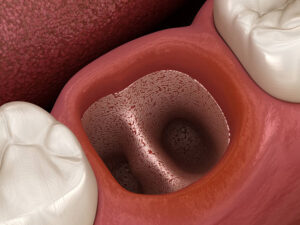
How Implant Failure Can Leave a Defect in the Jawbone
Inflammation around a failing implant can erode bone gradually. Removing the implant then leaves a space where the fixture sat.
The result varies widely. One site may have a small, contained defect. Another may lose height or width along the jaw. The size and shape of the defect guide everything that comes next, including whether a bone graft after dental implant failure is needed.
Rebuilding lost height or width is called ridge augmentation. If your specialist recommends ridge augmentation in St. Louis or Ballwin, the goal is to recreate a stable foundation for the new implant.
Bone Grafting and Guided Bone Regeneration
A few terms often come up during planning:
- A bone defect is an area where bone is missing or damaged.
- The alveolar ridge is the ridge of jawbone that holds teeth and implants.
- A bone graft is material placed in a defect to support new bone growth.
- Guided bone regeneration (GBR) uses graft material, often with a membrane, to support jawbone regeneration in a specific area.
- A barrier membrane is a thin layer that keeps gum tissue out of the graft so bone can fill the space.
Graft materials may come from your own body, a donor, an animal source, or synthetic materials. Your periodontist recommends one based on the defect and the treatment plan.
How a Periodontist Evaluates Whether the Bone Is Ready for Reimplantation
There’s no universal waiting period. A periodontist checks clinical healing, reviews imaging when needed, and compares the available bone with the planned implant position.
Some grafted sites are ready sooner than others. The decision rests on what the site shows during follow-up. For background on how dental implants and bone grafts work together, see our guide to bone grafting before dental implants.
How Guided Implant Surgery Can Help Plan a Replacement Implant
A failed implant shows where the first implant sat, how the bone responded, and what the restoration needed. Guided dental implant surgery turns that information into a new surgical plan.
It can improve placement accuracy, but no planning method prevents every implant problem. For patients exploring guided implant surgery in St. Louis, the value in revision cases is starting fresh with better information.
Evaluating the Previous Implant Site With 3D Imaging
A CBCT scan shows the remaining bone, defects, and nearby anatomy in 3D. That detail is the foundation of dental implant revision planning, letting the clinician compare the old implant position with where the new tooth should sit.
Planning Implant Position Around Remaining Bone and Anatomical Structures
Digital implant planning maps the implant’s length, width, position, and angle. It keeps the implant clear of nerves, the sinus, and neighboring roots, and lines it up with the final crown or bridge. Angle affects how biting forces travel and how easy the area is to clean, as our article on why implant placement angles matter explains.
Designing the Final Restoration Before Reimplantation
Specialists call this prosthetically driven planning. The crown or bridge is designed first, and the implant position follows, so the restoration bites properly and stays easy to clean. That avoids placing the implant wherever some bone happens to be. ActOn Implants offers guided dental implant treatment planning, which maps implant position around the final restoration before surgery.
What Is Recovery Like After Failed Implant Removal and Replacement?
Dental implant revision recovery depends on how many stages your treatment involves. Some patients have a single surgery. Others have removal, grafting, and implant placement as separate steps, each with its own healing period.
Recovering from the removal and healing around a new implant are separate phases, even when both happen at one appointment. Your clinician’s postoperative instructions are written for your specific case. Follow them over general advice.
Healing After Removing the Failed Implant
Dental implant removal recovery usually starts with mild soreness and swelling in the first days. Most patients manage with the medications and care steps their clinician recommends.
Follow-up visits confirm that the gum is closing and the site is free of infection. Healing time varies with the size of the defect and your overall health. If symptoms worsen instead of settling, check the warning signs listed below.
Recovery When Bone Grafting Is Part of the Treatment
Grafting adds a stage to treatment. The graft needs time to mature into bone that can support an implant.
That can extend the overall process, sometimes by several months. For many patients, it’s also what makes a stable replacement implant possible.
Osseointegration After the Replacement Implant Is Placed
Osseointegration is the process of bone growing tightly against the implant surface. It’s what gives an implant its stability. Our earlier article explains what happens once osseointegration is complete.
Osseointegration after implant replacement follows the same process. Your clinician monitors dental implant replacement healing and checks stability before attaching the final crown or bridge.
When to Contact the Implant Specialist During Recovery
Call your implant specialist promptly if you notice:
- swelling that gets worse instead of better
- fever
- bleeding that doesn’t stop with gentle pressure
- pus or drainage from the site
- unexpected movement of the implant
Avoid trying to judge these at home. A prompt evaluation is the safest way to catch a problem early.
How Much Does It Cost to Remove and Replace a Failed Dental Implant in St. Louis?
For revision cases, dental implant cost in St. Louis depends on what actually needs to be corrected. A loose crown repair and a full revision with grafting are very different treatments, with very different costs.
What Affects the Cost of Implant Revision Treatment?
Failed dental implant removal cost is only one part of the total. Your estimate may also reflect:
- diagnostic imaging, such as X-rays or a CBCT scan
- how complex the removal is
- whether bone grafting is needed
- any additional surgical stages
- the replacement implant itself
- the new crown, bridge, or denture
Is Replacing an Implant More Complex Than Placing the First One?
Sometimes. A loose implant surrounded by healthy bone may be relatively simple to replace. A site with major bone loss may need substantial reconstruction. Dental implant replacement cost is not automatically higher than the cost of the original placement.
Why a Personalized Consultation Is Needed Before Estimating Cost
An accurate estimate follows diagnosis and planning. Until the site is examined and imaged, any quoted cost would be a guess. You can review the factors affecting dental implant treatment costs before your visit.
ActOn Implants offers affordable dental implants in St. Louis and Ballwin. During your consultation, ask about payment options, including any available dental implant financing.
Frequently Asked Questions About Failed Dental Implant Replacement
Can a failed dental implant be removed and replaced?
Yes, a failed implant can often be removed and replaced. Success depends on controlling infection, having enough bone (or rebuilding it), and correcting factors behind the first failure. An exam and imaging confirm whether replacement is realistic for you and how many treatment stages it may take.
Can a dental implant be replaced in the same location?
Often, yes. A new implant can frequently go in the same area if enough healthy bone remains or can be rebuilt. The position may shift slightly, especially if the original implant was poorly angled. Your specialist plans the new position around the available bone and where the final crown needs to sit.
Does removing a failed dental implant hurt?
The area is numbed before removal, so many patients feel pressure rather than sharp pain. Some soreness and swelling are common afterward. Discomfort varies with the removal technique and whether grafting is done. Your clinician will explain anesthesia options and provide aftercare instructions to keep you comfortable.
Can an infected dental implant be replaced?
An infected implant can often be replaced once the infection is under control. The specialist first treats or removes the source of infection, then assesses the remaining bone and gum tissue. Healing time or grafting may come first, since placing an implant into an actively infected site is generally avoided.
Do I need a bone graft after implant removal?
Not always. It depends on the size of the bone defect and the replacement plan. A small, contained defect may need little or no grafting. Larger defects, especially from long-standing bone loss, often need rebuilding first. Imaging after removal shows which situation applies to you.
How long must I wait before getting another dental implant?
There’s no fixed waiting period. Some patients receive a new implant at the same visit as removal. Others wait for the site to heal or for a bone graft to mature. Your specialist re-evaluates the site at each stage and recommends timing based on healing.
Is a loose implant crown the same as a failed implant?
No. A loose crown usually points to a restoration problem, such as a loosened screw or worn abutment. The implant in the bone may still be stable. A failed implant means the fixture itself has lost bone support. Only an exam can tell the difference, so have any movement checked promptly.
Can a replacement dental implant fail again?
Yes, which is why revision planning focuses on underlying causes. Before placing a new implant, the specialist reviews bone quality, bite forces, gum health, and medical history. Addressing these factors improves the odds. Regular maintenance visits and good home care also help protect the new implant.
Explore Your Options for Failed Dental Implant Replacement in Ballwin, MO
An implant problem doesn’t mean you’ve run out of tooth replacement options. Can a failed dental implant be replaced? Often it can, but the right path starts with an accurate diagnosis.
At ActOn Implants in Ballwin, Dr. Matthew Slaven, a board-certified periodontist and implant dentist, evaluates implant health, bone support, and restorative options. During your consultation, you’ll learn whether your implant can be treated, or whether removal and replacement should be considered. Any next step follows a personalized treatment plan built around your findings.
We welcome patients from Ballwin, Manchester, Ellisville, Chesterfield, and greater St. Louis. If an implant feels loose, sore, or simply not right, schedule a dental implant evaluation and get clear answers about your next step.