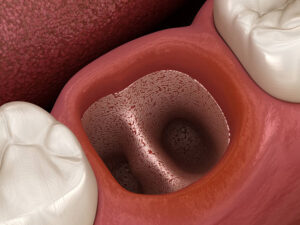
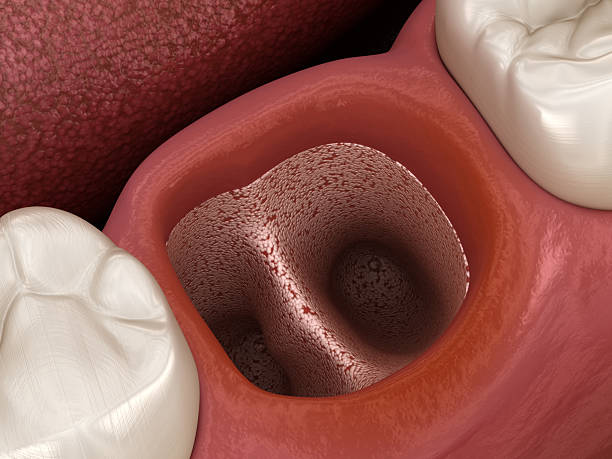
Socket preservation after tooth extraction can help protect your jawbone for a future dental implant. Timing is the key detail. The procedure happens at the extraction appointment or shortly after, so the best time to discuss it is before the tooth comes out.
What Is Socket Preservation After Tooth Extraction?
Socket preservation is a procedure performed at or shortly after a tooth extraction. Graft material is placed in the empty socket, sometimes under a protective membrane or other covering. It helps limit the natural loss of jawbone height and width after extraction. It doesn’t stop all bone change, but it may reduce it.
Its clinical name is alveolar ridge preservation, and patients sometimes call it a tooth extraction bone graft. It often comes up when planning dental implants in Ballwin, since ridge preservation for dental implants helps protect the site. Socket preservation protects bone that’s still there, unlike procedures that rebuild bone after significant loss.
What Happens to the Empty Socket After a Tooth Is Removed?
A tooth socket is the space in the alveolar bone that holds the tooth root. After extraction, a blood clot fills the extraction socket, then soft tissue and new bone replace it. Tooth socket healing is natural, but bone remodeling can leave the ridge narrower or shorter.
How a Bone Graft Helps Maintain the Shape of the Jawbone
Graft material fills the socket and acts as a framework, which may help limit ridge collapse while the site heals. It isn’t an instant new bone. Your body gradually forms bone in and around it.
Socket Preservation vs. Ridge Augmentation: What’s the Difference?
Both use grafting, but for different purposes.
| Feature | Socket Preservation | Ridge Augmentation |
|---|---|---|
| Timing | At or shortly after extraction | After bone loss has occurred |
| Goal | Limit dimensional changes | Increase or rebuild bone dimensions |
| Starting Point | A fresh socket with bone still present | An existing width or height deficiency |
The techniques sometimes overlap when a socket wall is damaged. Our guide to rebuilding bone that has already been lost explains augmentation further.
Why the Jawbone Shrinks After a Tooth Extraction
A tooth root sits in the alveolar bone, held in place by the periodontal ligament. As the socket heals, alveolar ridge resorption can cause jawbone shrinkage after extraction, in both width and height.
The amount of bone loss after tooth extraction varies with tooth location, gum disease, socket-wall condition, trauma to the area, and healing. That’s why preserving bone after tooth loss is planned case by case.
The Role of the Tooth Root and Periodontal Ligament in Supporting Bone
The periodontal ligament is a thin layer of fibers that cushions the root within the alveolar bone and keeps that bone active during chewing. Once the root and ligament are gone, that environment changes, and some of the bone that existed mainly to hold the tooth resorbs.
Why Ridge Width and Height May Decrease During Healing
Ridge width, or buccolingual width, runs from the cheek side to the tongue side. Ridge height is the vertical dimension.
Each socket has a buccal wall facing the cheek or lips and a lingual or palatal wall facing the tongue or palate. During post-extraction remodeling, the buccal wall often changes more, so width tends to shrink more than height, though every patient differs. Both dimensions shape the dental implant bone support available later, including what size implant fits and where.
Why Thin Socket Walls or Existing Bone Damage Matter
The buccal bone plate is the outer wall facing the lips or cheeks, and it’s often thin, especially around front teeth. Sites with thin bone, gum disease damage, a previous infection, or a broken socket wall may change more and need additional evaluation.
How Post-Extraction Bone Changes Can Affect Future Dental Implants
A narrower or shorter ridge can limit implant positioning, add a grafting step, and change the crown design, surgical plan, and treatment complexity. That doesn’t mean an unpreserved socket rules out an implant. The plan may simply look different.
When Is Socket Preservation Recommended Before Dental Implants?
So when is socket preservation needed? Not after every extraction. Whether it’s recommended depends on the existing bone, the socket’s condition, the planned restoration, timing, and your health. Extraction socket grafting is most often considered in these situations.
When a Tooth Will Be Replaced With a Dental Implant Later
Some patients need a tooth removed now but plan a delayed implant after healing. For them, socket preservation before dental implants can help protect the site in the meantime.
Because preservation is decided at the extraction itself, your dentist needs to know your replacement goal beforehand. If you’re considering single tooth dental implants in Ballwin, mention it early. Dental implant site preservation is easiest to plan before the tooth comes out.
When an Extraction Socket Has Thin or Damaged Bone Walls
Intact socket walls help hold graft material in place and guide new bone into the right shape. A socket with its walls largely intact is the typical candidate for preservation.
When part of a wall is thin or missing, the graft has less support and the ridge may collapse more. These sites may need a more extensive reconstructive approach, either at extraction or as a separate stage.
When a Front Tooth Is Removed
Front teeth sit in the most visible part of your smile, and the bone there is often thin. If the ridge collapses, the gum line can shift. A future implant crown may then look longer or sit out of line with neighboring teeth.
When Several Teeth Need to Be Extracted
Removing several adjacent teeth leaves a larger area to heal, and the ridge contour across that span affects how the final restoration fits. Planning differs depending on whether the goal is a bridge, several implants, or another option.
How Socket Preservation Is Performed During Tooth Extraction
The socket preservation procedure usually happens at the same appointment as the extraction. As with any extraction, the area is numbed first. Combining tooth extraction and bone graft placement avoids a separate surgery. The steps below describe a common ridge preservation procedure, but approaches and materials vary by site.
Step 1 — Removing the Tooth While Protecting Surrounding Bone
The dentist removes the tooth as gently as possible. The socket walls, especially the thin outer wall, can be damaged easily, and intact walls give the graft better support. Some teeth come out simply. Others are broken, curved, or fused to the bone, and not every socket wall can be saved.
Step 2 — Cleaning and Evaluating the Extraction Socket
Next, the dentist removes inflamed tissue, called granulation tissue, and any infection. They check the socket walls and remaining bone. These findings determine what site management makes sense.
Step 3 — Placing Bone Graft Material Inside the Socket
If preservation is appropriate, the dentist places an extraction socket bone graft. This step is the core of dental socket grafting. The material fills the space and supports the socket’s shape as healing begins, giving the new bone a framework to grow into. Graft material may come from a human donor, an animal source, your own body, or synthetic materials, as explained below.
Step 4 — Using a Membrane or Protective Covering When Needed
A barrier membrane or other covering may go over the graft. It helps hold the graft in place and keeps gum tissue separate from the healing bone. Not every case needs the same covering, and some need none.
Step 5 — Allowing the Socket and Graft to Heal
The gum closes over the site first, usually well before the bone underneath has matured. Bone forms gradually beneath it, and the graft remodels over the following months. Because a healed-looking gum doesn’t confirm the bone is ready, follow-up visits check healing before implant placement is discussed.
What Bone Graft Materials Are Used for Socket Preservation?
Several dental bone graft types are used in socket preservation. Research hasn’t shown that any single bone graft material after extraction works best for every case. The choice depends on your site and treatment plan.
Human Donor Bone and Other Biologic Graft Materials
An allograft is bone from a human donor, processed and sterilized for medical use. Other biologic options include xenografts, from animal sources, and autografts, which use your own bone.
Synthetic Bone Graft Materials
An alloplast is a synthetic graft material. These lab-made socket graft materials are another category of bone substitute, designed to support bone growth without using human or animal tissue.
Barrier Membranes and Soft-Tissue Protection
Both types of membrane help keep gum tissue out of the graft while bone forms. Resorbable membranes dissolve on their own during healing, so no removal visit is needed. Nonresorbable membranes stay in place until the dentist removes them. They’re typically chosen when a site needs longer or more rigid protection.
How the Specialist Chooses a Graft Material
Choosing among alveolar ridge preservation materials depends on the extraction site, the intended implant, and the shape of any defect. Your medical history, material suitability, and planned healing approach also matter. Your periodontist explains the recommended option during planning.
Is Socket Preservation Better Than Letting an Extraction Heal Naturally?
Not always. When comparing an extraction with a bone graft vs. without one, both approaches can be appropriate. Socket preservation may reduce ridge changes when an implant is planned. It hasn’t been shown to guarantee better implant outcomes or to rule out later grafting in every case. The right choice depends on your clinical needs and replacement goals.
What Happens When an Extraction Socket Heals Without Grafting?
Without a graft, the socket fills with a clot, then soft tissue, then new bone, and the ridge remodels naturally. This is appropriate care for many patients, especially when no implant is planned.
What Socket Preservation May Help Maintain
When weighing socket preservation vs. no graft, the main ridge preservation benefits relate to dimensions. Preservation may reduce loss of ridge width and height, though it doesn’t preserve every millimeter of bone.
The research on this is still limited. Studies haven’t clearly shown that preservation leads to better-looking or longer-lasting implant restorations.
Can You Still Get Dental Implants Without Socket Preservation?
Yes, in many cases, depending on bone availability and your treatment plan. Some patients have enough bone after uncomplicated healing, while others need grafting later or a different implant plan.
When Socket Preservation May Not Be Necessary
Is socket preservation necessary when no implant is planned? Often not. It may also be unnecessary if the site should heal with adequate bone, or if other clinical factors point elsewhere. A good plan includes only the procedures your site needs.
How Long Does Socket Preservation Take to Heal Before Dental Implants?
Socket preservation healing time has several stages. The gum closes first, bone forms underneath more slowly, and the graft keeps remodeling after that. A healed gum surface doesn’t mean the bone is ready for an implant.
Patients often ask how long after socket preservation they can get an implant. It depends on the site, and no date can be guaranteed.
Early Gum and Extraction-Site Healing
The first days and weeks focus on protecting the site. Follow your dentist’s instructions on eating, cleaning, and activity while the gum closes over the graft.
Bone Formation and Graft Remodeling
Bone graft healing after extraction takes much longer than gum healing. New bone forms gradually in and around the graft material. The pace of healing after an extraction bone graft varies with the site, the material, and your health.
How Dentists Decide When the Site Is Ready for an Implant
Your dentist examines the site and uses imaging when appropriate. They assess available bone, quality of healing, location, and the planned implant. Those findings confirm readiness.
What Happens If the Patient Waits Longer Before Getting an Implant?
A preserved site doesn’t hold its shape indefinitely. If implant treatment is postponed, the ridge can keep changing, so reassessment before placement matters. Our article on how tooth loss affects the jawbone over time explains why timing counts.
Socket Preservation vs. Immediate Dental Implant Placement
When comparing socket preservation vs. an immediate implant, it helps to know they aren’t necessarily competing options. Socket preservation with delayed placement and immediate placement suit different sites, depending on diagnosis, site conditions, and goals. For a broader look at timing, see our article on choosing between immediate and delayed implant placement.
When an Implant May Be Placed Immediately After Extraction
An immediate implant after extraction goes into the fresh socket at the same appointment. It requires an appropriate implant position and adequate initial stability, meaning the surrounding bone holds the implant firmly from the start. Not every site qualifies.
When Socket Preservation and Delayed Implant Placement May Be Preferred
Delayed dental implants after extraction may be preferred when socket walls are damaged, infection is present, or stability looks uncertain. Preserving the site first gives the clinician a healed, evaluated ridge.
Can Bone Grafting Be Performed During Immediate Implant Placement?
Sometimes. If a gap remains between the implant and the socket walls, or the surrounding bone is thin, grafting may accompany the implant. It isn’t automatic.
Why the Best Option Depends on the Extraction Site
| Factor | Socket Preservation With Delayed Implant | Immediate Implant Placement |
|---|---|---|
| Main Approach | Preserve the extraction site before later placement | Place an implant at the extraction appointment |
| Clinical Requirements | Appropriate site for preservation and later rehabilitation | Suitable anatomy, positioning and initial stability |
| Healing Sequence | Extraction-site healing before implant placement | Implant healing begins after immediate placement |
| Additional Grafting | May still be needed | May also be needed |
| Selection | Individualized clinical assessment | Individualized clinical assessment |
Good tooth extraction implant planning weighs both pathways before the appointment.
How Socket Preservation Supports Future Single-Tooth and Multiple-Tooth Implants
Preserved bone matters most when it serves the final restoration. Not every restoration needs socket grafting, but when it’s used, the goal is a ridge shaped for the replacement teeth.
Preparing for a Single Tooth Implant in Ballwin, MO
A single implant replaces one extracted tooth. It has to sit within the remaining alveolar ridge, beneath the future crown. For dental implants in Ballwin, MO, the crown’s planned position guides where the implant goes.
If the ridge has narrowed, the site may need grafting first, or the implant may have to sit in a less ideal spot. Patients exploring single tooth implants in Ballwin can discuss these trade-offs before extraction, when more options remain open.
Preserving Bone When Multiple Teeth Are Missing
Across several missing teeth, the ridge’s size and shape guide restoration design. A collapsed span can limit where implants fit and leave visible gaps beneath a bridge. Options include multiple tooth implants in Ballwin, an implant-supported bridge, or a traditional bridge. Patients comparing dental bridges in Ballwin with implants benefit from dental implant planning that starts early.
Why Implant Positioning Matters for Long-Term Function
Preserved anatomy gives the clinician more choices. Available ridge width affects implant angulation, which influences bite forces, restoration position, and long-term cleaning. Our article on how implant angulation affects long-term function explains this further.
How a Periodontist Plans Socket Preservation and Future Dental Implants
Socket preservation sits between an extraction and a future implant, so planning both together gives a more predictable path. That planning draws on periodontics, the specialty focused on the gums and bone that support teeth and implants.
Dr. Matthew Slaven, a periodontist in Ballwin, leads ActOn Implants, a dental implant center serving Ballwin, MO, and greater St. Louis. For patients researching socket preservation in St. Louis, a dental implant specialist can evaluate the extraction site and future implant together.
Evaluating the Tooth, Gum Tissue and Surrounding Jawbone
The exam covers the tooth being removed, neighboring teeth, gum health, and the surrounding bone. Active gum disease or infection may change the sequence.
Using Imaging to Plan Future Implant Position
When appropriate, a CBCT scan shows ridge width, height, and nearby structures in 3D, guiding where the future implant and crown should sit.
Coordinating Extraction, Bone Preservation and Implant Restoration
A typical sequence runs from extraction and site management through healing, reassessment, implant placement, and the final crown. Planning the restoration early helps every step serve that goal.
When a More Extensive Bone Graft May Be Necessary
Socket preservation works best when most of the socket’s bone is intact. Larger defects, missing walls, or long-standing bone loss may need more extensive reconstruction.
How Much Does Socket Preservation Cost in Ballwin and St. Louis?
Socket preservation cost depends on your treatment, so there’s no standard price. Dental bone graft cost in St. Louis varies for the same reason. As with dental implant costs in St. Louis generally, the total reflects what your site needs.
What Factors Affect the Cost of Socket Preservation?
Factors that shape bone graft after tooth extraction cost include:
- extraction complexity
- the size and shape of the defect
- the graft material
- whether a membrane is used
- follow-up visits
- the overall implant plan
Is Socket Preservation Included in the Price of a Dental Implant?
Not necessarily. Estimates and billing vary by provider and treatment plan. Ask which services your estimate includes and what your insurance may cover.
Can Preservation Help Reduce Future Treatment Complexity?
It may simplify later implant placement in some cases. It doesn’t always prevent future grafting or lower total cost. Our page on understanding dental implant treatment costs explains how estimates come together. ActOn Implants focuses on affordable dental implants in Ballwin, and you can ask about payment options at your consultation.
Frequently Asked Questions About Socket Preservation After Tooth Extraction
Is socket preservation necessary after every tooth extraction?
No. It depends on your clinical situation and plans for replacing the tooth. It’s most often considered when an implant is planned, the tooth is visible, or the socket walls are thin. Many extractions heal well without it.
Does socket preservation prevent all jawbone loss?
No. Socket preservation may limit changes in ridge width and height, but it doesn’t stop natural remodeling. Some bone change still happens, so your dentist reassesses the site before implant placement.
Is socket preservation the same as a dental bone graft?
Socket preservation uses a dental bone graft, but the terms aren’t identical. The bone graft is the material, and socket preservation is the procedure of placing it in a fresh extraction socket.
Does socket preservation hurt more than a regular extraction?
The area is numbed for both, so many patients notice little difference during treatment. Afterward, soreness and swelling are common, and grafting may add some tenderness. Experiences vary. Your dentist will explain anesthesia options and aftercare to help keep you comfortable.
How long does it take for a socket bone graft to heal?
The gum usually closes first, while the bone underneath takes considerably longer to form and mature. For many sites, implant readiness is several months away, and graft remodeling continues after that. Your dentist confirms readiness with an exam and imaging, since every site heals at its own pace.
Can I get a dental implant without socket preservation?
Yes, many patients can. It depends on how much bone remains after healing and on your treatment plan. Some sites have plenty of bone, while others need grafting before or during implant placement.
What happens if I already had a tooth extracted without a bone graft?
The site can still be evaluated for an implant. Imaging shows how much bone remains, and if the ridge has narrowed, grafting may be done before or during implant placement.
Can socket preservation be performed when a tooth has an infection?
It depends on the type and extent of the infection, the socket’s condition, and your clinician’s assessment. Some infected sites can be cleaned and grafted at extraction, while others need infection management first.
Can an implant be placed immediately instead of doing socket preservation?
Sometimes. Immediate placement requires a suitable site, an appropriate implant position, and enough initial stability. When those conditions aren’t met, preserving the socket and placing the implant later may be the better path.
Protect Your Jawbone Before Tooth Extraction — Schedule an Implant Consultation in Ballwin, MO
If you’re facing an extraction and might want a dental implant later, talk about it before the tooth comes out. That conversation shapes what happens at the extraction appointment, including whether socket preservation makes sense.
At ActOn Implants, Dr. Matthew Slaven, a board-certified periodontist in Ballwin, can evaluate the tooth that needs extraction and assess the surrounding bone and gums. He can also discuss whether socket preservation fits your situation and review future implant options, such as single tooth implants in Ballwin. Together, you’ll build a personalized treatment sequence.
ActOn Implants welcomes patients seeking dental implants in Ballwin and across St. Louis, including Manchester, Ellisville, and Chesterfield. Contact us to discuss your extraction and future implant options before your tooth is removed.